Rethinking Emergency Response with Cube
By Suman Subudhi | Creator & Chief Technical Architect of RADIUS
Emergencies do not arrive on a schedule. They erupt without warning, demanding swift, decisive action that often decides whether an organization regains control or slides into a full-blown crisis. Across industries, leaders invest tremendous effort to prepare for both the threats they anticipate and the ones they cannot. Yet, even with that effort, the moment something goes wrong, response often becomes the hardest part.
In too many organizations, emergency response still runs on manual, disjointed systems. People scramble across phones, chats, spreadsheets, and inboxes to figure out who knows what, who should act, and who needs to be informed. Delayed communication and unstructured escalation can quickly turn a manageable situation into an uncontrollable one, with serious operational, financial, and human consequences.
That reality led me to a question I could not let go of:
How do we empower organizations to act decisively when every second counts?
The answer, I came to believe, lies in automation and engineered efficiency. Not automation that replaces human judgment, but automation that protects it, by removing friction, eliminating guesswork, and making sure the right people are alerted at the right time. That conviction is what led us to build Cube.
Why We Built Cube: The Emergency Response System
Cube is an Emergency Response System meticulously designed to handle emergencies with agility and expertise. It is purpose-built for industries where downtime, delay, or miscommunication carries real cost, healthcare, manufacturing, logistics, energy, and IT & ITES, among others. In each of these environments, response cannot be improvised. It has to be orchestrated.
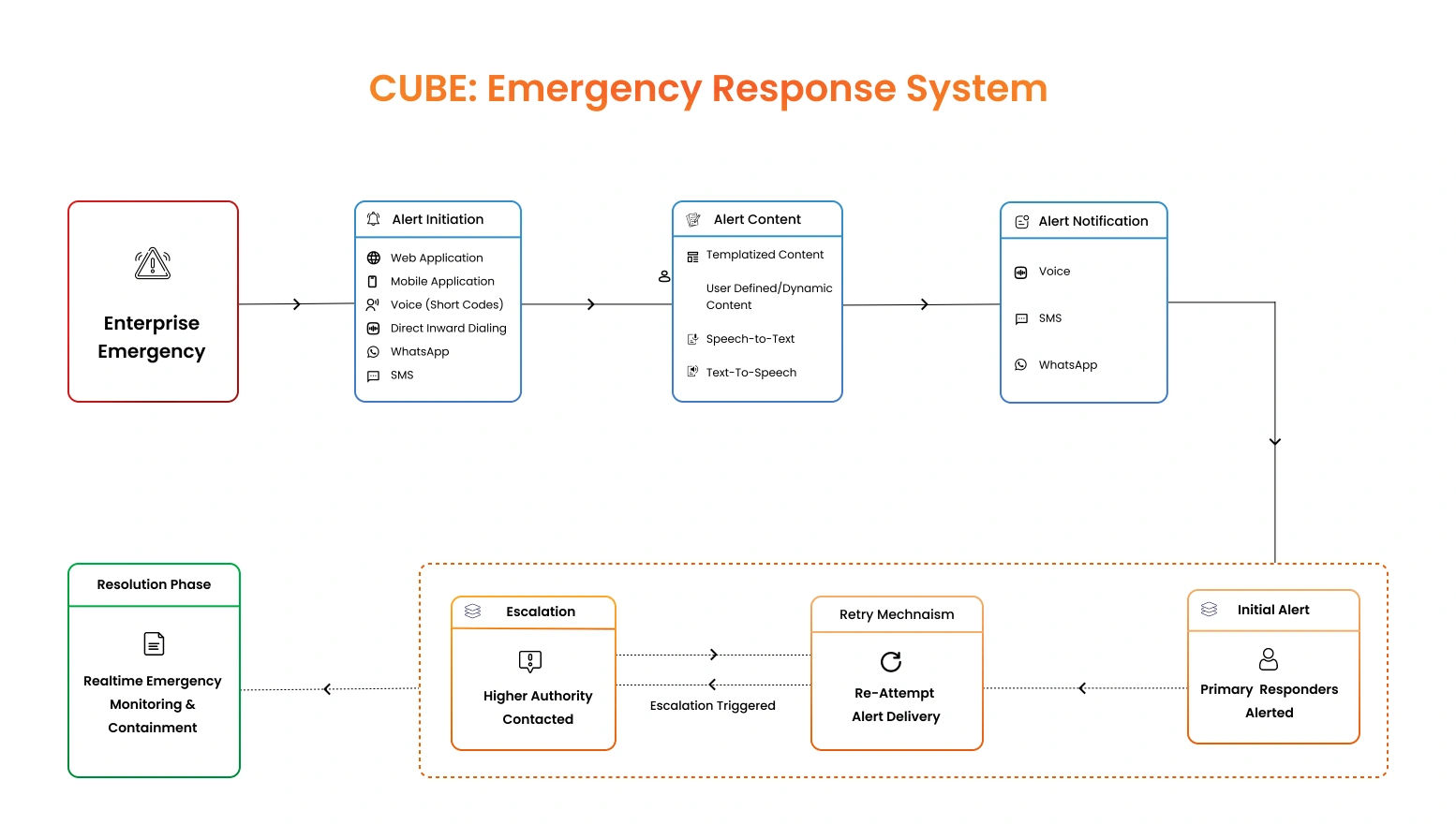
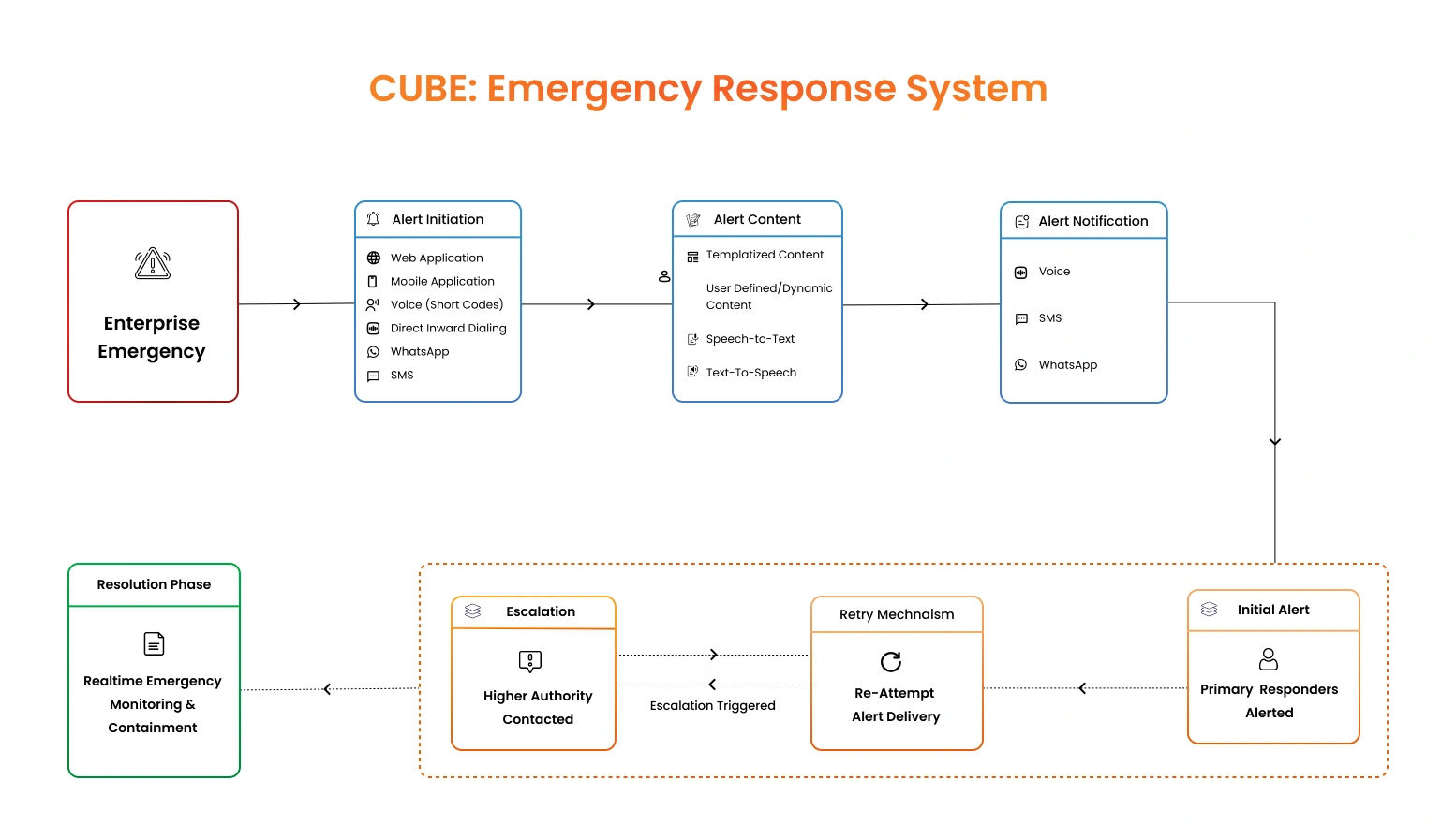
What Cube transforms is the response process itself. Instead of a frantic chain of phone calls and ad-hoc messages, organizations get a precision-driven workflow that classifies the incident, alerts the right people across the right channels, escalates when it must, and tracks the response in real time. The nightmare of “who is handling this?” is replaced by clarity, coordination, and accountability.
How Cube Works
Cube is built around five capabilities that, together, change the rhythm of emergency response:
• Smart Categorization. Every emergency is classified by severity and type so that the response is matched to the situation, not generalized across all incidents.
• Multi-Channel Reporting. Incidents can be reported across multiple platforms, with instant notifications delivered via voice, SMS, and WhatsApp, so no one is dependent on a single channel being available.
• Precision Communication. Predefined, user-defined messages ensure clear and concise communication during high-pressure moments, with the flexibility to customize messages for specific scenarios.
• Automated Escalations. If an initial alert is not acknowledged within the configured window, Cube automatically escalates to higher authorities, ensuring that no critical alert goes unanswered.
• Real-Time Monitoring. Emergency responses are monitored live, fostering coordination across teams, reducing response time, and minimizing operational impact.
Each capability is useful on its own. Combined, they produce something more valuable: a single, accountable view of the incident from the moment it is reported to the moment it is resolved.
Engineered for the Moment It Matters Most
An emergency response platform cannot afford the luxury of “mostly available.” If it falters during the very moments it is meant to serve, it becomes part of the problem. Cube is built as a high-availability, secure solution and deployed on a multi-cloud infrastructure to ensure reliability and guaranteed uptime during critical moments. Resilience is not a feature; it is the foundation.
Where Cube Delivers the Most Impact
Cube has been designed to flex around the realities of each industry it serves. Some of the scenarios where it has redefined emergency response include:
• Ambulance dispatch systems where minutes shape patient outcomes.
• Fire alarm and incident management across facilities and campuses.
• Hospital bed and patient emergencies where coordination across departments is non-negotiable.
• Natural calamities and disaster response requiring large-scale, multi-stakeholder communication.
• Strike, building maintenance, and safety protocols where structured escalation prevents minor issues from becoming major ones.
In each case, the pattern is the same: faster awareness, structured action, and a clear record of what happened and what to improve next time.
A Final Thought
Crises rarely punish organizations for the rarity of the event. They punish them for the friction in the response. If we can engineer that friction out through smart categorization, multi-channel alerts, precise communication, and automated escalation, we give organizations something they too often lack at the worst moment: confidence.
That is the standard we hold Cube to. And it is the standard I believe every emergency response system should be held to.
If you would like to explore how Cube can strengthen your organization’s emergency response, learn more at radius-ois.ai/emergency-response-system or reach out to our team for a tailored walkthrough.