Customer expectations have changed radically. Today, customers don’t think about which channel to use when they need help; they just want help in the application they are already using. WhatsApp is an application for millions of people around the world.
Businesses flocked to WhatsApp to send order updates, provide customer support, confirm OTPs, send appointment reminders, and even have sales conversations, meeting customers right where they’re already spending their time. But there was one big limitation: WhatsApp Business was, at first, a messaging-only platform. When an issue needed a live agent, customers had to leave the chat, call another number, and often restate their request to someone who didn’t have the context of the conversation.
The difference has now narrowed, and in this blog post, we discuss what WhatsApp voice calling entails, how it impacts enterprise customer experience, and what else needs to be in place for the technology to function effectively.
What WhatsApp Voice Calling for Business Actually Is
WhatsApp has allowed individuals to call each other for free since 2015. What is new is the ability for a verified business number to make and receive voice calls too, inside the same chat a customer was already using to message them.
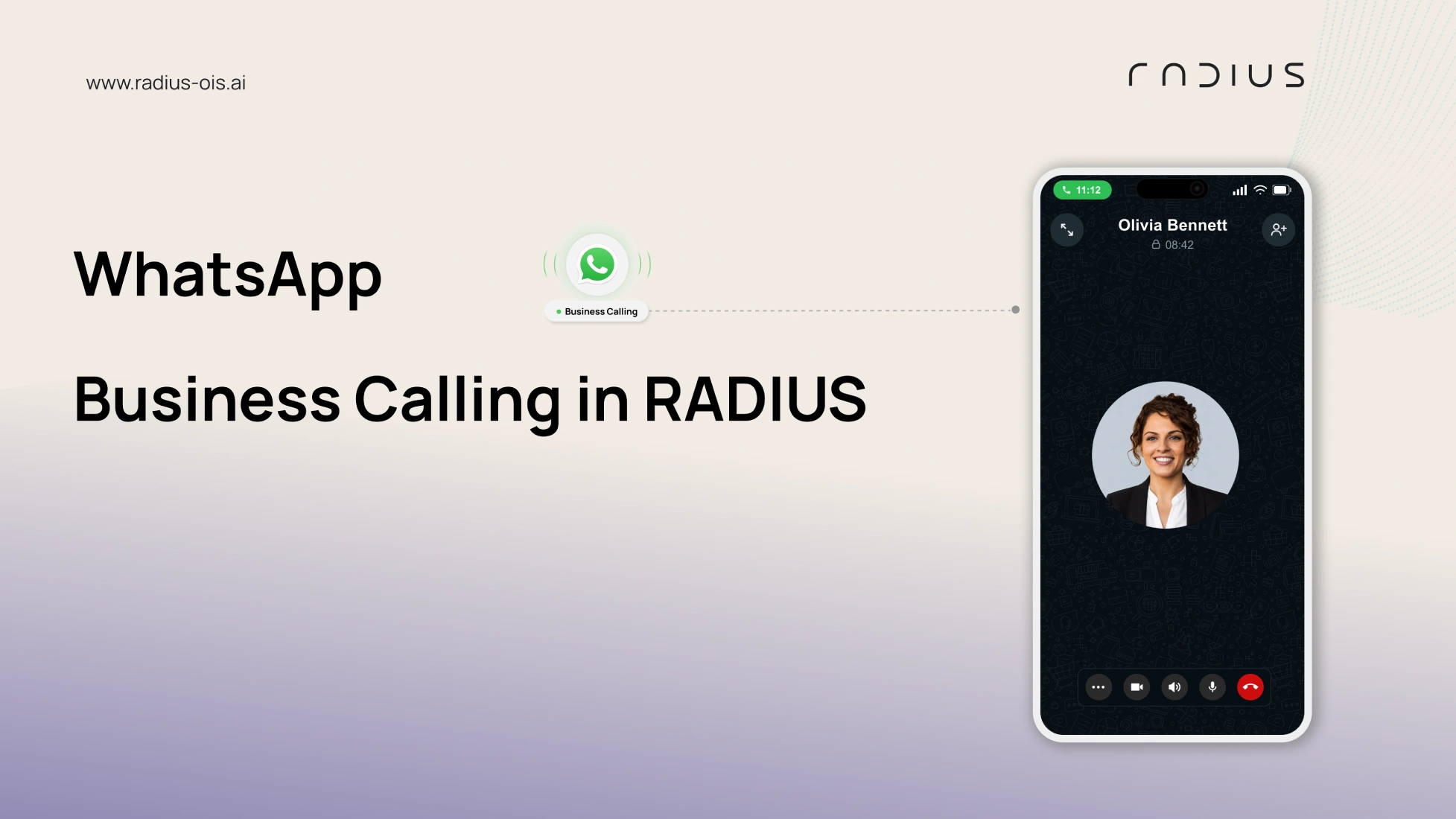
The call button is now right there in the conversation window. The client clicks the button and communicates with the business without the need to dial any number or leave WhatsApp. In case the business decides to place the call, WhatsApp will ask for permission from the customer, just like it does when the business sends a message. On the call screen, the verified business name and logo are displayed, helping customers instantly recognize who is calling and making them more likely to answer.
What is most essential about this innovation is not the call button but the fact that after clicking it, the client sees everything he or she has said in the thread. Because the call happens within the same customer conversation, businesses can retain context from earlier interactions, reducing the need for customers to repeat information.
Why This Matters for Enterprise CX
Consider a common scenario. A customer messages a bank regarding a failed transaction. A chatbot helps with the process, but it is not enough. Up until now, the enterprise would have had to give up the thread, dial a different support number, spend some time waiting for a connection, and begin a new thread from scratch. Now, the customer can simply tap the Call button within the same conversation and continue the interaction with an agent who already has access to the previous chat and relevant customer context.
There are a couple of reasons why this matters for enterprises:
- Uninterrupted Conversations: Customers will not lose any context during their transition from a text-to-voice conversation.
- Higher Call Answer Rates: People usually pick up calls from recognized numbers with a business name in them way more often than calls from unknown numbers.
- Faster Resolutions: Urgent and hard-to-decipher-over-text problems will be solved instantly through a call.
- A Single, Seamless Journey: Rather than treating a text message and a call as two separate customer journeys, enterprises can now connect them into a single seamless process.
WhatsApp provides the calling capability, but enterprises still need a platform that can manage these interactions at scale. Routing, agent availability, reporting, quality monitoring, and customer context must work together to deliver a truly seamless experience.
How RADIUS Makes This Work at Scale
WhatsApp opening up voice calling solves the problem from the customer’s side. It does not automatically solve it for a business managing thousands of these conversations every day.
Somebody has to pick up that call and route it to the correct department, whether that is support, billing, or sales. The managers have to be able to track how these calls are managed, just like they would do for any other interaction. WhatsApp calls shouldn’t stand alone as a separate communication channel, while all other communications, phone calls, emails, and chats are managed separately.
This is where RADIUS comes into play as an AI-driven omnichannel interaction system that leverages the same capabilities in terms of routing, context, and supervision for WhatsApp voice that it uses for voice, chat, and email communications. Already defined routing rules within the RADIUS system determine the team or individual agent who receives a WhatsApp voice call, just as it would happen with all other channels.
The receiving agent gets a complete view of the customer’s information in a single unified workspace so that a WhatsApp voice call retains its history instead of coming cold to the receiving agent. Supervisors can monitor, review, and coach WhatsApp voice interactions using the same quality management and analytics tools they already use across other channels. WhatsApp created the capability for calling, but RADIUS determines the routing, experience when answering the call, and tracking the interaction after it is over.
Making the Omnichannel Promise Real
Omnichannel customer experience has always meant one conversation, any channel, with no need to repeat yourself. Until recently, voice interactions on WhatsApp remained outside that unified experience. WhatsApp closing this gap is a genuine step toward making that promise real.
For enterprises already engaging customers on WhatsApp, the question is no longer whether to enable voice calling. It is about whether the systems running behind the scenes can keep messaging and voice connected so that every conversation, however it starts, stays whole.
Ready to bring WhatsApp messaging and voice together in one AI-powered customer engagement platform? Book a Demo to see how RADIUS delivers connected customer conversations across every channel.
Frequently Asked Questions(FAQs)
Q1: Is WhatsApp Voice Calling the same as a regular WhatsApp call between two people?
Regular WhatsApp calling lets individuals call each other for free. WhatsApp Business Calling is a newer feature that lets businesses make and receive voice calls through their WhatsApp Business numbers, directly inside the customer’s existing chat. Calls can be started from WhatsApp chats, interactive messages, or deep links embedded in websites and apps.
Q2: Do customers have to leave the chat or dial a separate number?
No. The user reaches out directly to the business using the call button in the chat, a call button in an interactive message, or a link on your website. There are two call types: user-initiated (inbound) calls and business-initiated calls, which your business can make to a user after the user has granted permission.
Q3: Will the agent have the earlier chat history when a voice call starts?
WhatsApp itself keeps the call inside the same conversation thread, but the full customer context reaching your agent depends on your platform. Integrated reporting and billing with the WhatsApp Business Platform handle the call data, while a system like RADIUS is what unifies the chat history and customer record into one agent workspace.
Q4: Why do we need a platform like RADIUS if WhatsApp already offers calling?
WhatsApp provides the calling capability, not the contact-center infrastructure. At enterprise volume, calls still need routing to the right department, agent availability, quality monitoring, and reporting. RADIUS applies the same routing, unified context, and supervision to WhatsApp voice that it uses for voice, chat, and email.
Q5: Does branded caller ID really improve answer rates?
Yes. When a user receives a call from your verified sender, their screen displays your business name, verified badge, and logo, and branded caller ID can increase answer rates by making calls appear legitimate and expected.
Also Read: Top CXM platforms in the market